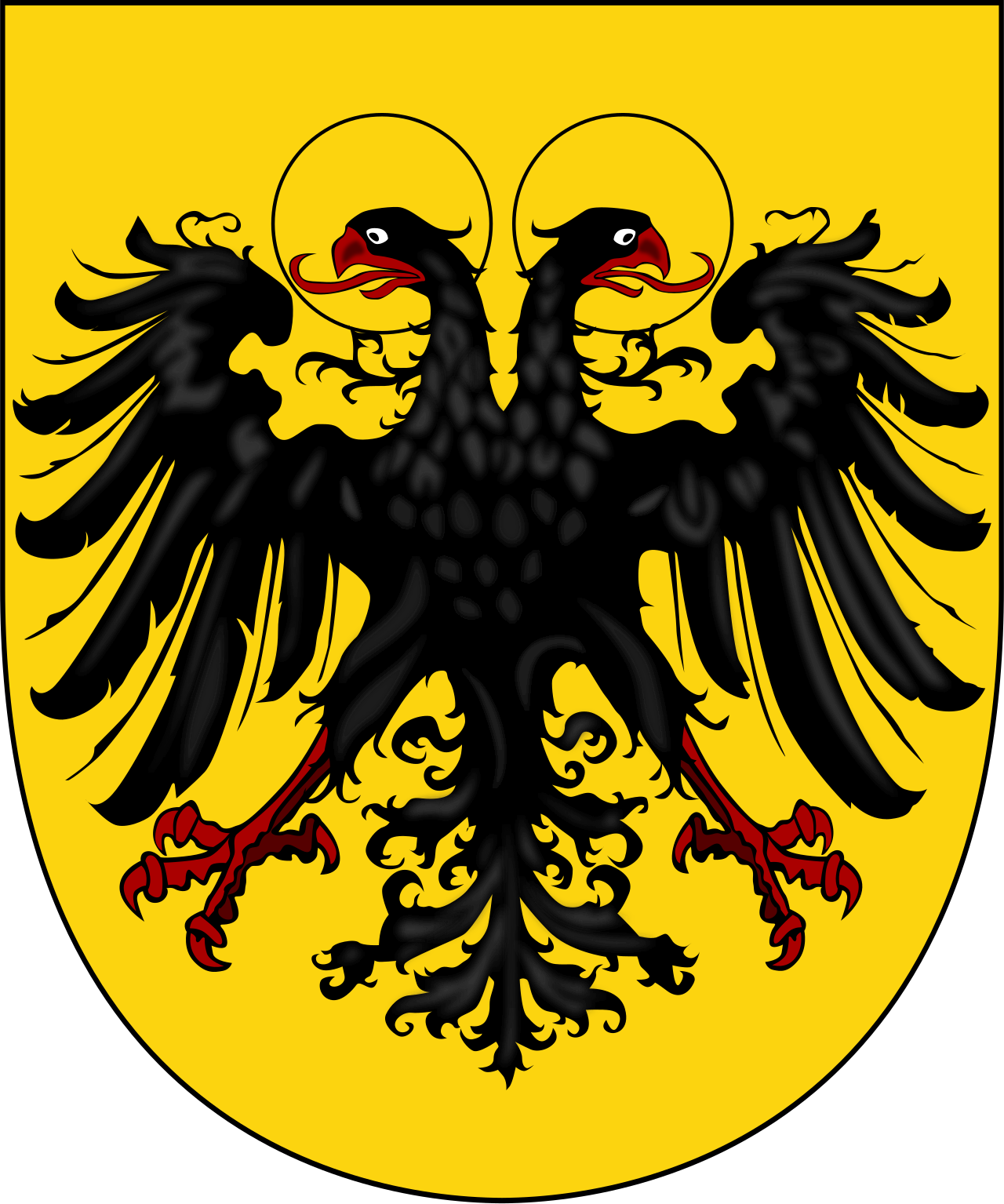
The Holy Roman Empire carried one of the most debated names in European history. It sounds impressive on first hearing—holy, Roman, an empire—but each of those three words became a problem. By the eighteenth century, the French writer Voltaire could sum up a millennium of controversy with a single line: the realm was “neither holy, nor Roman, nor an empire.” The quip stuck, and it has followed the Empire around ever since.
The trouble is that Voltaire was both right and wrong. His description captures what the Empire had become by his own time, a loose collection of mostly German states held together by habit and paperwork. But the name did not start as empty rhetoric. Each part of it meant something specific when it first appeared, and the dates of those appearances matter more than most people realize.
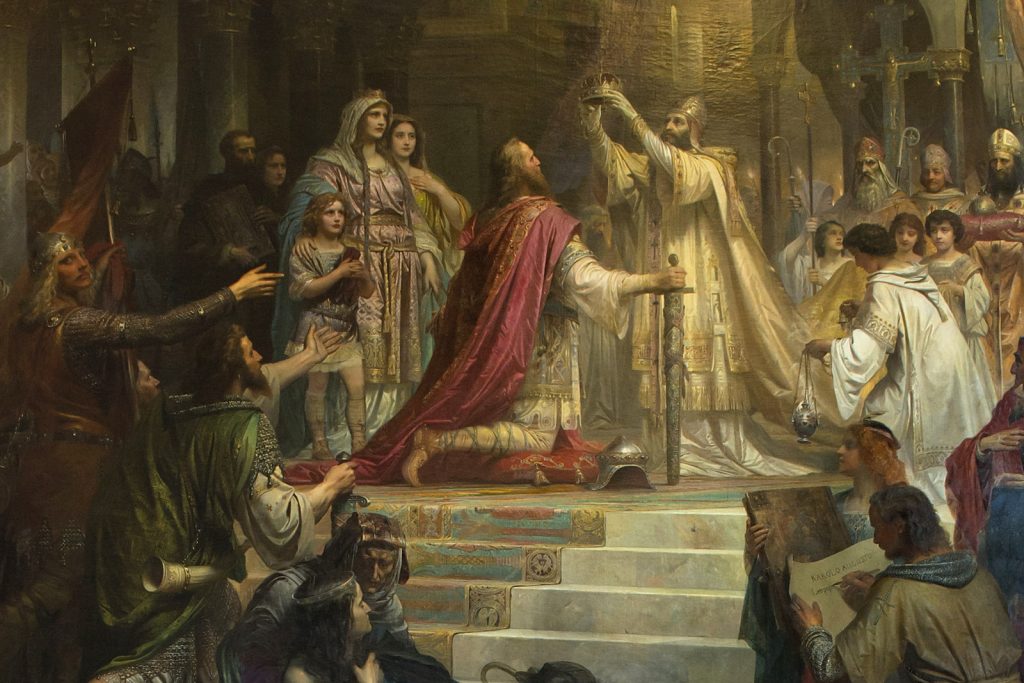
The oldest piece is “Empire.” Charlemagne was crowned Emperor of the Romans by Pope Leo III on Christmas Day in the year 800. The title had been dormant in the West since 476, when the last Roman emperor was deposed. Reviving it was a statement: Rome had not truly fallen if a new emperor could still claim its authority. Charlemagne styled himself as the successor of Augustus and Trajan, and his successors maintained the idea that imperial power had simply transferred from the old Roman world into a new Christian one. This concept, called translatio imperii, gave the whole enterprise its intellectual backbone.
“Roman” was attached to the Empire from the start in a sense, since Charlemagne was crowned “Emperor of the Romans.” Otto I revived the title in 962 after a gap of several decades, and his descendants used the phrase “Roman Empire” outright. The claim was geographical as much as ideological. The Empire included the northern half of Italy for centuries, and the city of Rome itself, though the Pope controlled it, was never entirely outside the emperor’s orbit. Calling the realm Roman was a way of asserting that the ancient imperial tradition lived on in a German-led state that stretched from the North Sea down into Italy.
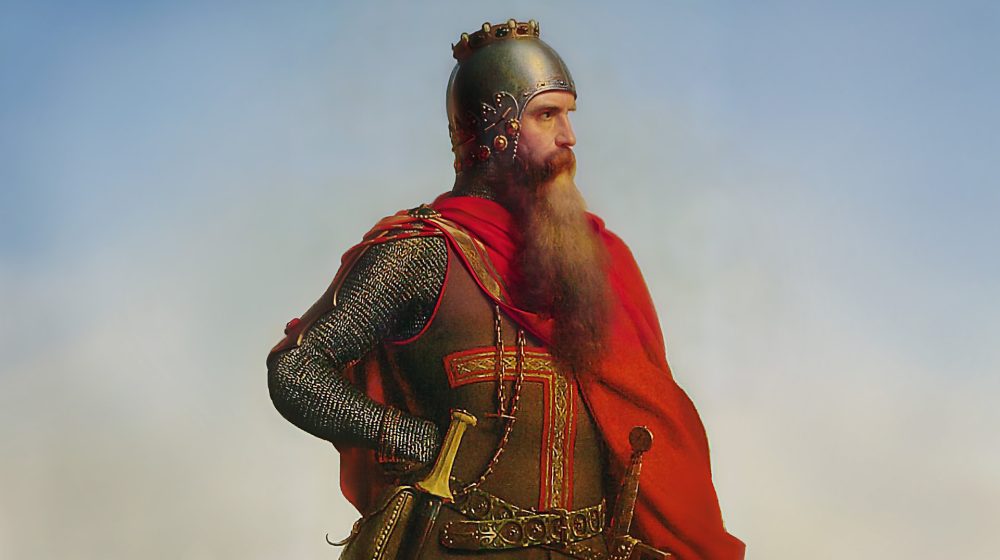
“Holy” arrived later. Frederick Barbarossa’s chancery began using the term sacrum imperium—”holy empire”—in 1157. The timing was not accidental. Frederick was locked in a struggle with the papacy over who held ultimate authority in Christendom. Adding “holy” to the empire’s name was a direct challenge to the Church’s claim to be the sole sacred authority on earth. It declared that the emperor answered to God, not to the Pope. The full three-part name, “Holy Roman Empire,” appears in documents starting from 1254.
There was one more addition. By the late fifteenth century, the phrase “of the German Nation” began appearing in official documents. A decree from 1512 made it common, though it never became the formal legal title in the way later textbooks assumed. The shift reflected a changing reality. The Empire had lost effective control of Italy and Burgundy. What remained was overwhelmingly German-speaking, and the rulers who mattered were the princes and electors of the German lands. The name shrank to match the territory.
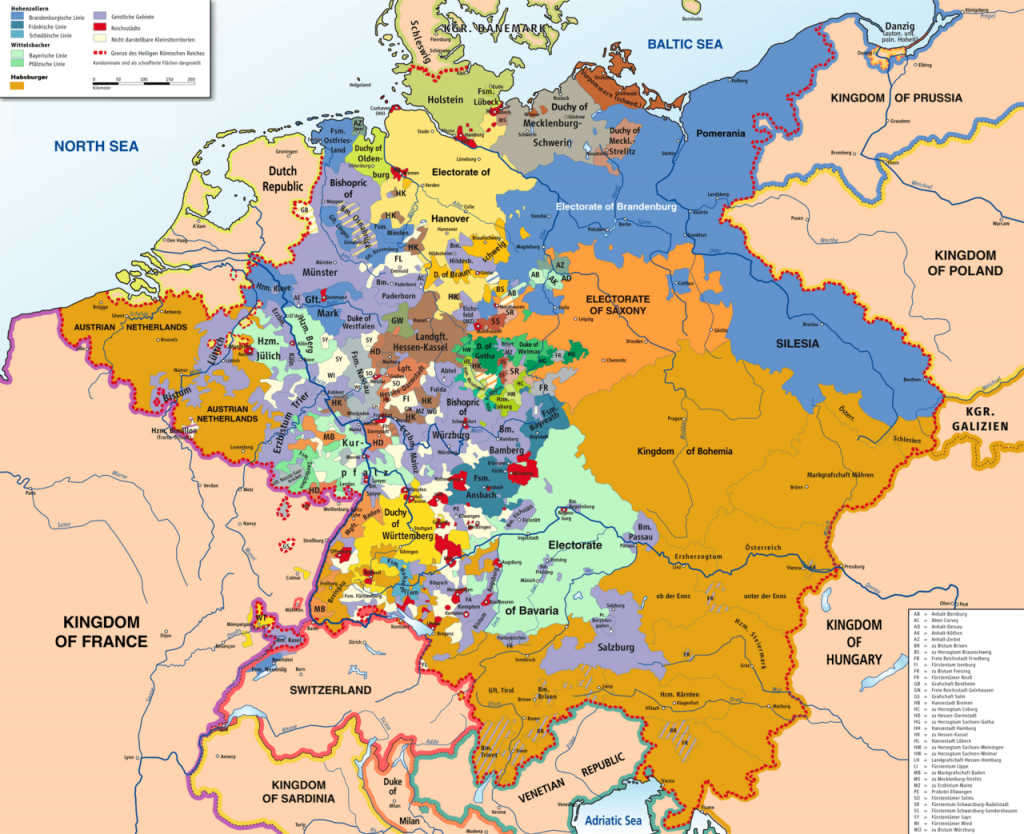
Why Voltaire’s jab stung so much by the 1750s was that all three original claims had worn thin. “Holy” rang hollow after the Reformation split Christendom and the Empire’s emperors spent centuries fighting religious wars they could not win. “Roman” described a state that no longer included Rome and whose connection to the ancient empire was purely symbolic. “Empire” implied a centralized authority, but the Holy Roman Empire operated as a patchwork of electorates, duchies, free cities, and bishoprics, each with its own laws and privileges. The emperor could not raise taxes or command an army without the consent of the Imperial Diet, and that consent was rarely given.
Still, dismissing the name entirely misses what held the Empire together for a thousand years. The title gave the emperor a status above other European monarchs. It created a framework for resolving disputes between the Empire’s smaller states through courts rather than endless private wars. And it offered a vision of Christian unity that, however imperfect in practice, outlasted every other medieval institution except the papacy itself. The name was a claim, not a description. Claims do not need to be factual to be effective. They just need to be believed.