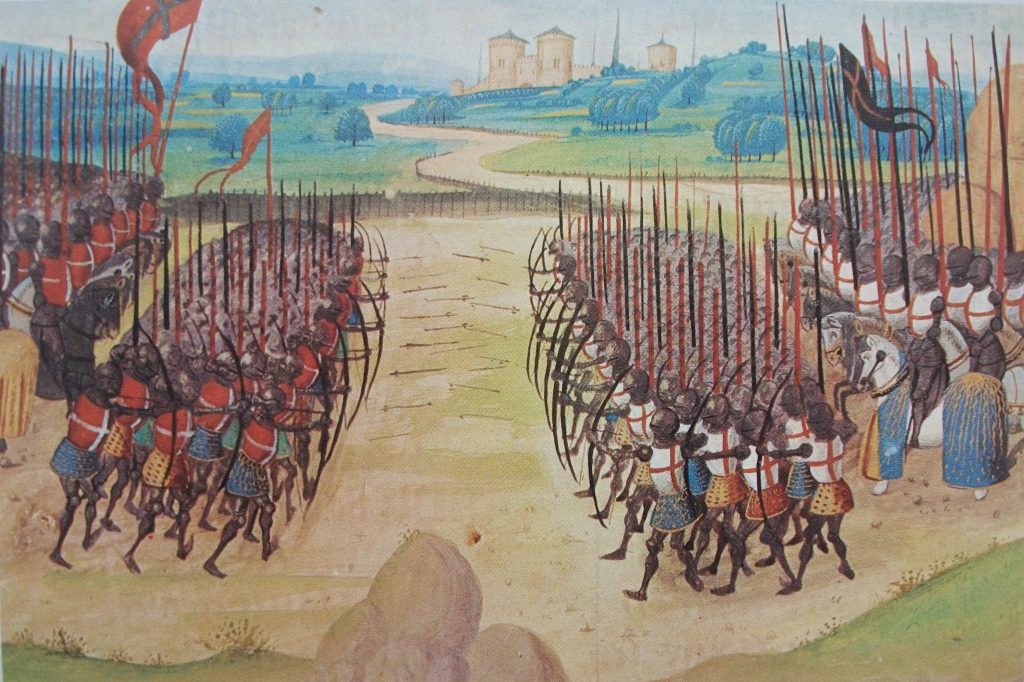
The longbow did not begin at Agincourt, though that is where most people meet it. The weapon had been around in Wales for generations before the English crown took an interest. Welsh archers had used it against the English themselves during the Norman invasions of Wales, and with enough effect that the conquerors eventually decided to borrow the idea rather than keep bleeding from it. By the time Edward I finished his campaign in Wales in the late thirteenth century, the longbow was already on its way to becoming the signature weapon of English armies for the next two hundred years.
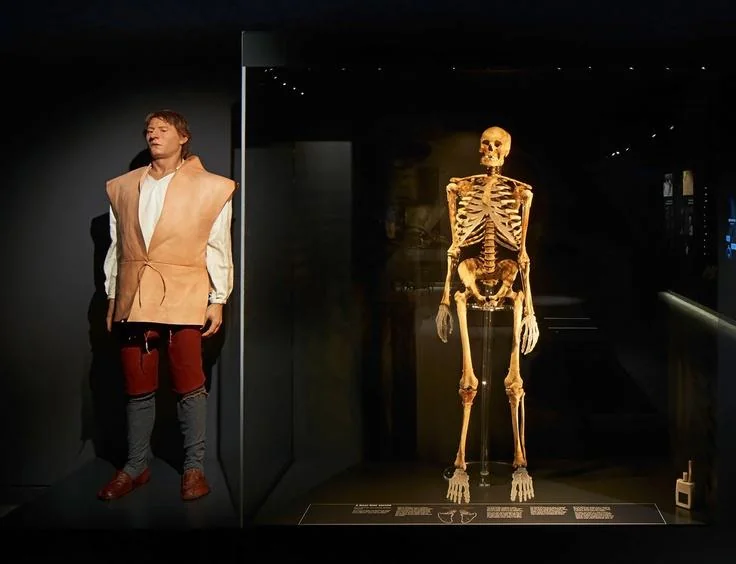
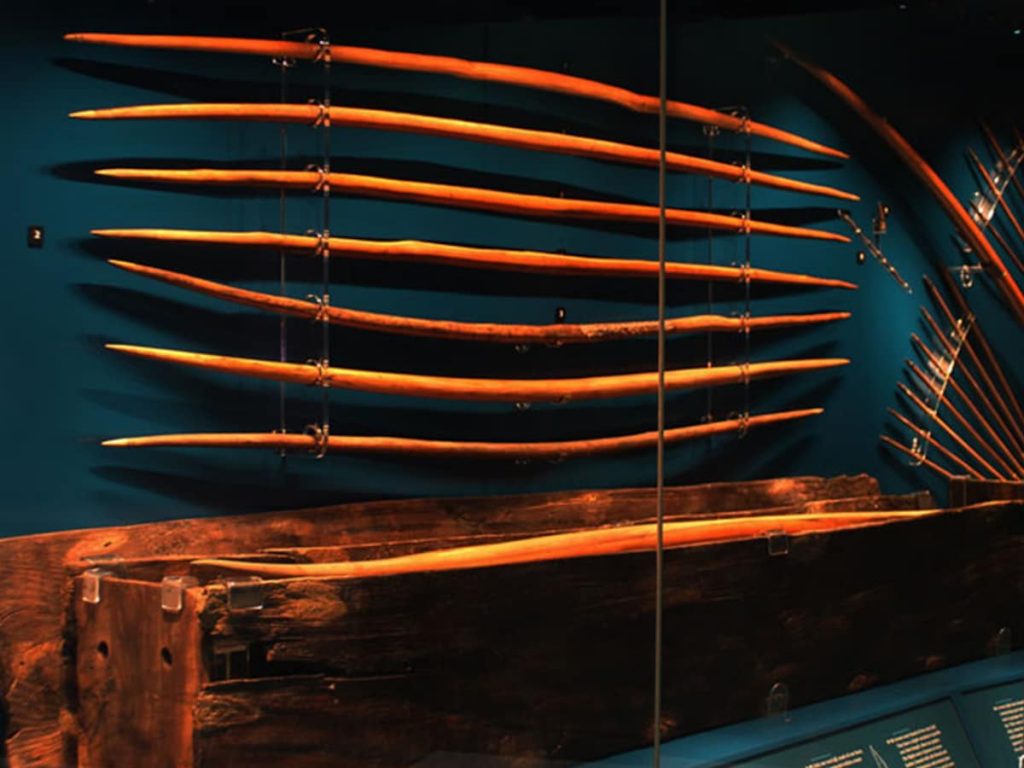
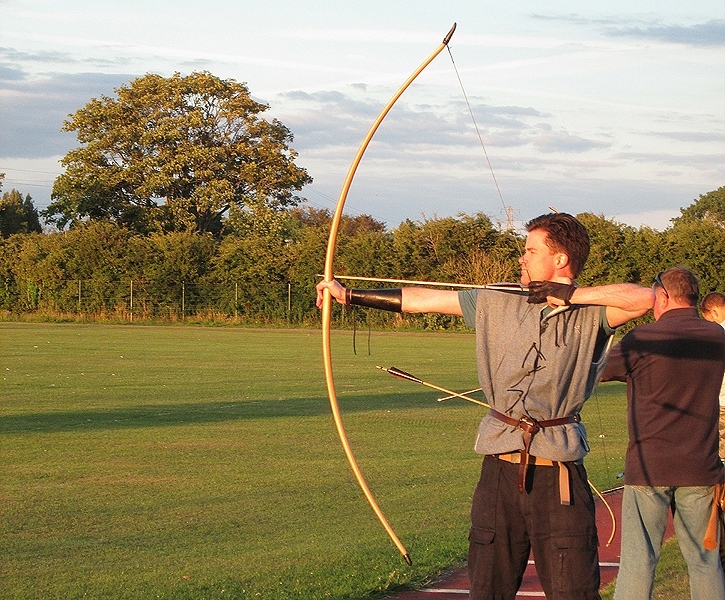
What made the longbow different from other bows of the period was its size and its draw weight. A proper war bow stood about six feet tall, often cut from a single piece of yew, and required a draw force somewhere between one hundred and one hundred eighty pounds to pull to full extension. For comparison, most modern recreational bows draw at thirty to fifty pounds. Pulling a longbow meant engaging muscles in the back, shoulders, and arms that most people never develop in ordinary life. Skeletons of medieval archers recovered from sites like the Mary Rose show thickened bone in the left arm and right shoulder, deformations caused by years of repeated stress. These were not farmers handed a bow and told to make do. They were specialists whose bodies had been reshaped by the work.
Training began in childhood, which was the only way to build the strength and technique required. In England, archery practice was mandated by law. The Assize of Arms of 1252 required all men between fifteen and sixty to equip themselves with bows and arrows. Edward III banned football and other games on Sundays so that men would spend their free time shooting instead. Villages set up butts on the outskirts of town where boys as young as seven would practice, gradually increasing their range and draw weight as they grew. By the time a man reached fighting age, he could shoot ten to twelve aimed arrows in a minute, and a skilled archer could manage more.
A company of longbowmen working together did not aim at individual targets in the way a modern sniper would. They shot in volleys, angling their arrows high so that the shafts fell onto enemy formations from above. The arrows were about three feet long, tipped with iron heads designed to punch through chainmail or lodge in the gaps of plate armor. At close range, a bodkin point arrow could pierce plate outright. At longer range, the sheer density of falling arrows caused chaos among horses and men who had never faced anything like it. The effect was less like a firefight and more like a hailstorm that lasted ten minutes.
The battles that made the longbow famous—Crécy, Poitiers, Agincourt—share a pattern. English armies, often outnumbered and fighting on foot, chose defensive positions where the terrain protected their flanks. Archers took position on the wings or between divisions of men-at-arms, sometimes behind a line of sharpened stakes driven into the ground. French cavalry, confident in their heavy armor and their tradition of mounted chivalry, charged into the killing zone. The horses went down first. The knights, pinned under their mounts or struggling to rise in heavy plate, faced English infantry who moved in to finish the work. At Agincourt in 1415, an English force of perhaps six thousand men, most of them archers, defeated a French army several times its size. French casualties numbered in the thousands. English dead numbered in the hundreds.
The longbow did not make armor obsolete overnight. Plate armor continued to improve throughout the fifteenth century, and a well-made breastplate could stop most arrows outside of very close range. What the longbow did was change the economics of the battlefield. A knight took years to train and cost a fortune to equip. An archer could be trained cheaply and in large numbers. The arrow was an inexpensive projectile that could kill an expensive soldier. Over time, the balance of power shifted away from the mounted aristocracy and toward the common soldier who had spent his childhood pulling a bowstring in a muddy village field.
The decline of the longbow came with changes in warfare rather than any failure of the weapon itself. Cannons improved and became more mobile. Handguns, though slow and inaccurate at first, required less physical training than the bow. A man could learn to fire an arquebus in weeks rather than years. Armies grew larger and more professional, and states began to raise permanent forces rather than relying on seasonal levies. By the time the Mary Rose sank in 1545, carrying a full complement of longbows aboard, the weapon was already on its way out of regular service. The last recorded use of longbows in a major English battle was at Tippermuir in 1644, during the English Civil War, though by then they were a curiosity rather than a decisive force.
What lingers about the longbow is not the battles themselves but the culture it created. For a few centuries, ordinary English and Welsh men carried a skill that made them feared across Europe. The bow was not glamorous. It did not confer status like a sword or a horse. But in the hands of someone who had been drawing one since childhood, it could drop a knight before he ever reached the line. That kind of power, quiet and workmanlike and accessible to people without titles, was rare in the medieval world. It left a mark.